Veil of Cosmic Illusion in Advaita Vedanta
In Advaita Vedanta, Maya is not a complete falsehood, but a relative reality that conceals the absolute Brahman. It functions like a magic show, projecting the diverse universe of names and forms onto a single, undivided consciousness. Once recognized, the illusion loses its power to deceive.
The ancient roots of oneness
The master of non-duality
The magic show of the mind
Waking up to who you are
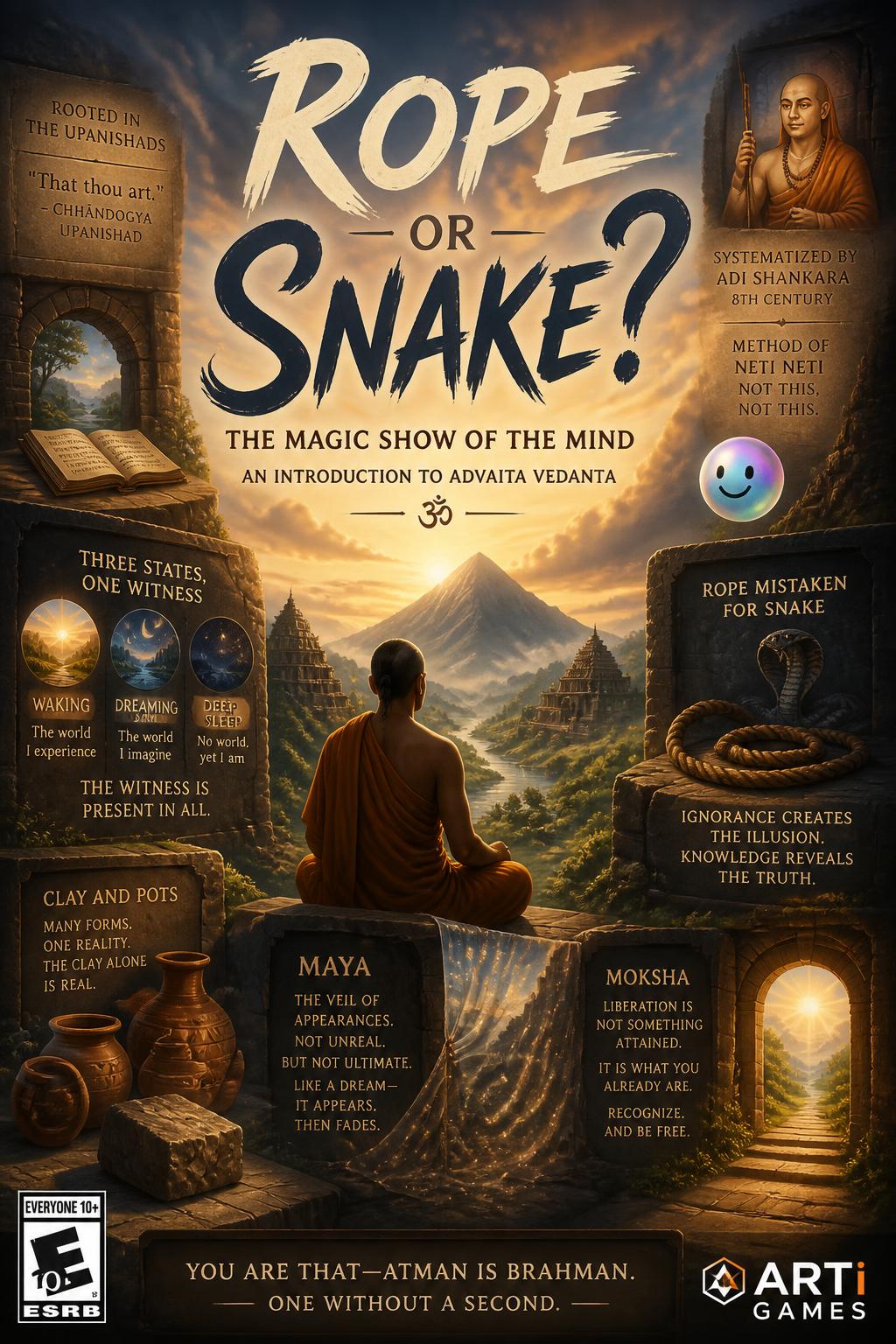
sloane Swipe away illusions to learn how the rope and snake analogy explains our true self.
sloane Advaita Vedanta
Only a rope, not a snake! (Only a rope!) It's a trick our minds make!
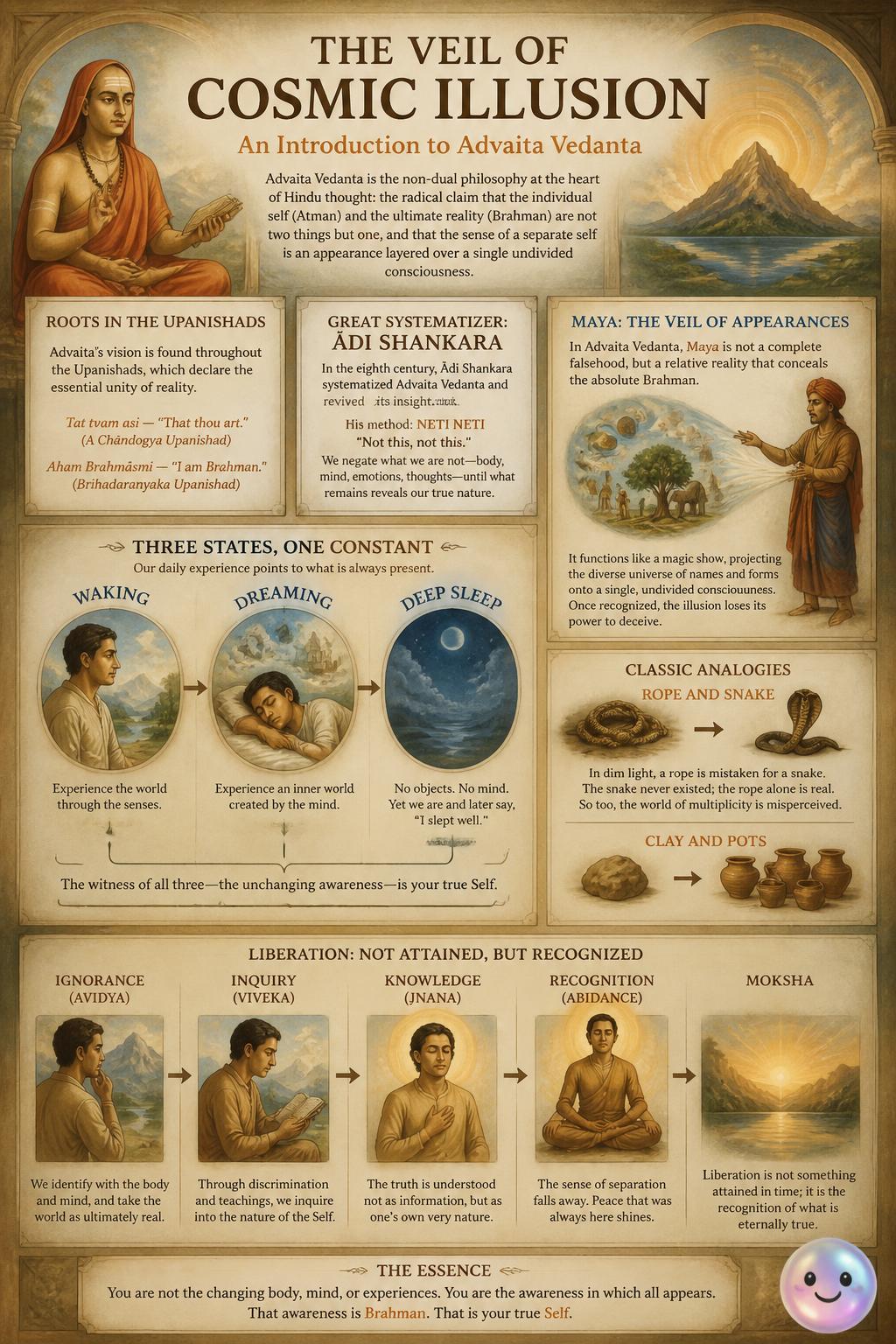
sloane Maya is the concept of a cosmic illusion or creative power that makes the single reality appear as many different things.
Rope trick: In the rope-snake analogy, the snake never actually existed; the fear disappears the moment a light is shone on the rope.
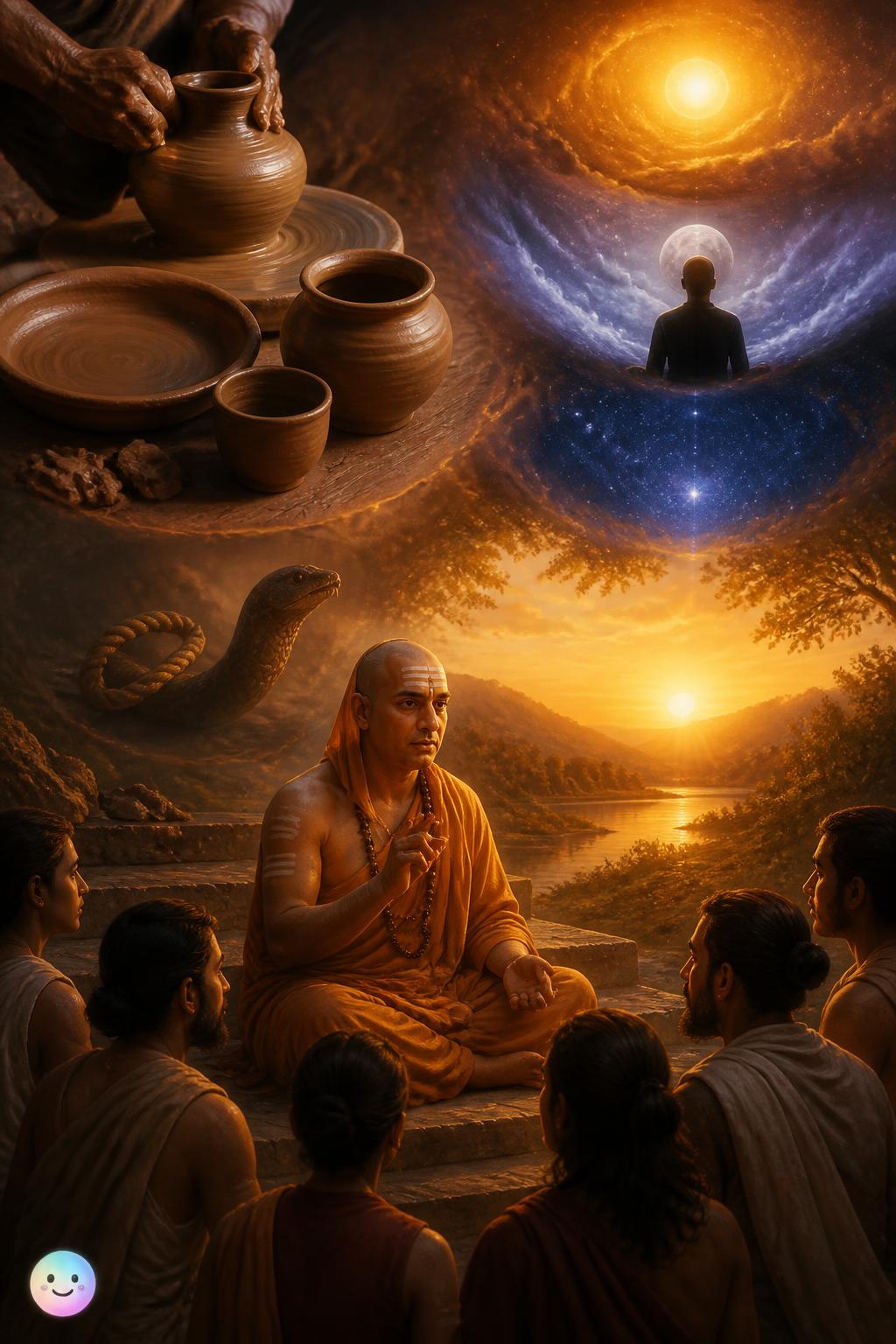
sloane The analogy of clay and pots explains that while shapes and names change, the underlying substance remains exactly the same.
The powerful force that creates the cosmic illusion that the phenomenal world is real. Eighth-century thinker Adi Shankara compared this illusion to mistaking a harmless rope for a snake.
In the jewelry analogy used in Advaita, what underlying substance represents Brahman?