The Three Daily Worlds in Advaita Vedanta
We experience three states daily: waking (jagrat), dreaming (svapna), and deep, dreamless sleep (sushupti). In waking, we see the physical world. In dreaming, the mind creates its own world. In deep sleep, both the world and the mind vanish, yet we wake up knowing we slept peacefully, proving an observer was still there.
The ancient roots of oneness
The master of non-duality
The magic show of the mind
Waking up to who you are
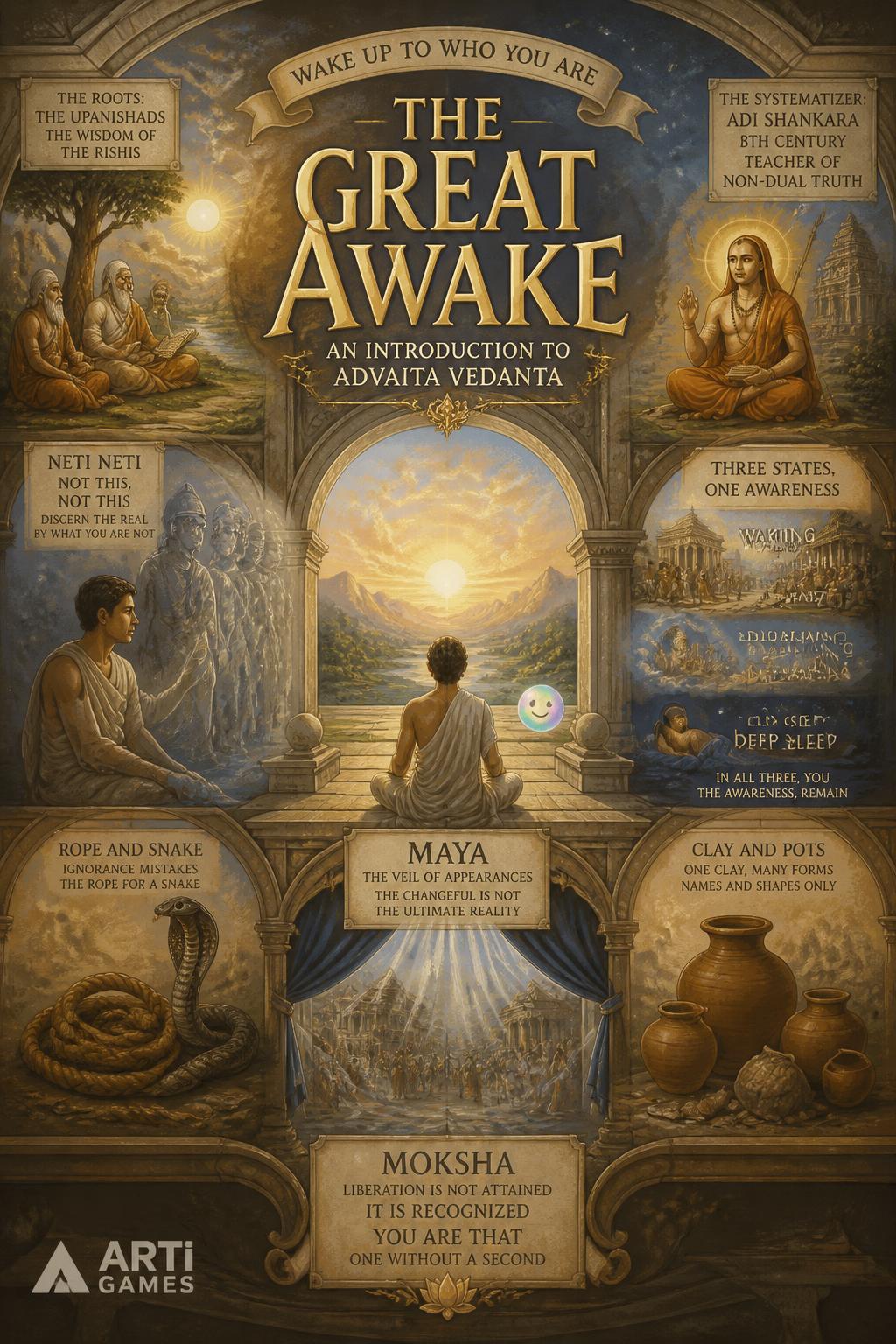
sloane Swipe away the veil of illusion to discover how the self and reality are one.
sloane Advaita Vedanta
The clay is still the clay, though we give the pot a name, You are the silent witness that is always the same.
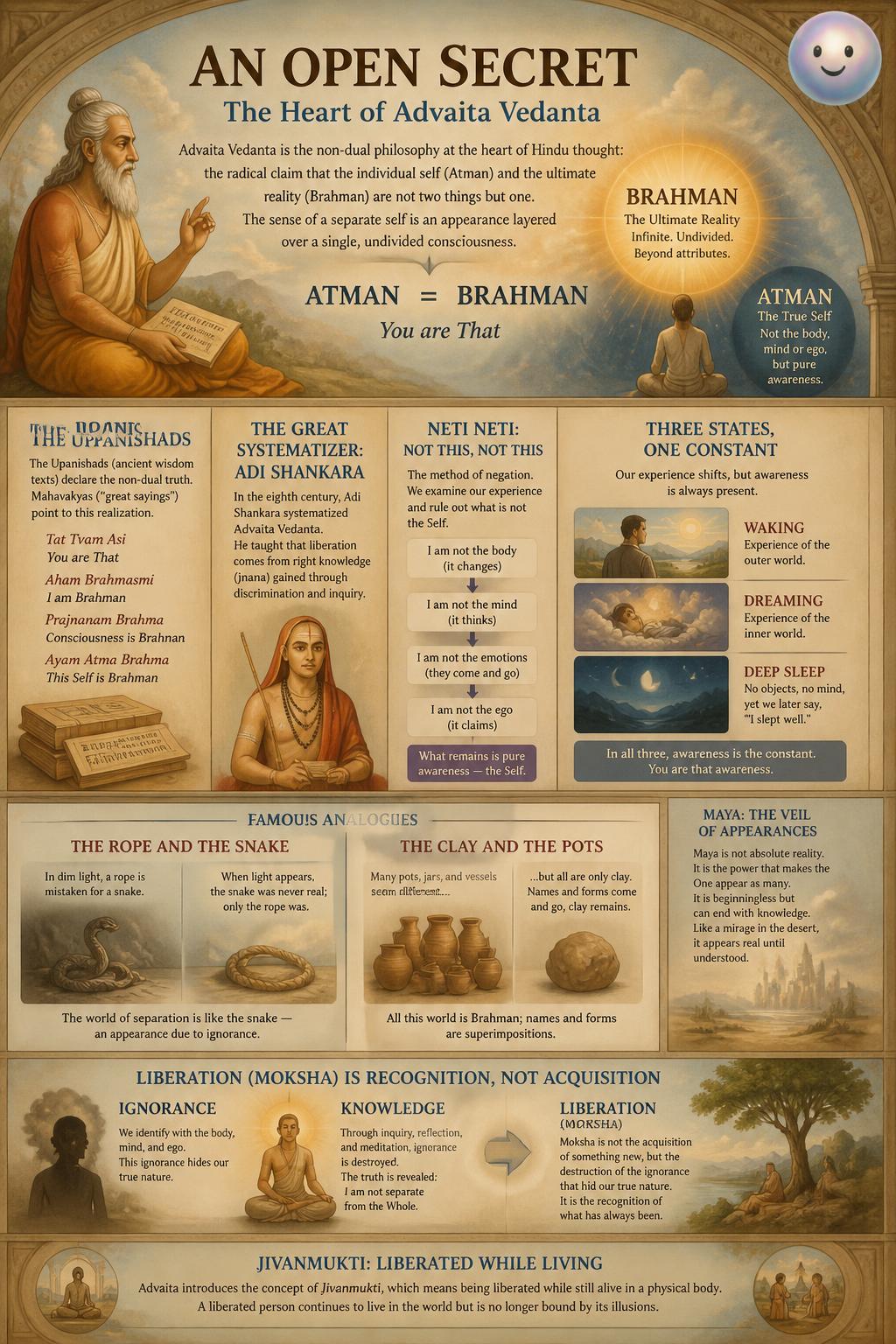
sloane Liberation, or moksha, is not a place you go after death, but a shift in perspective here and now.
Deep sleep peace: In deep, dreamless sleep, we experience peace because the ego temporarily dissolves, showing that our true nature is blissful.
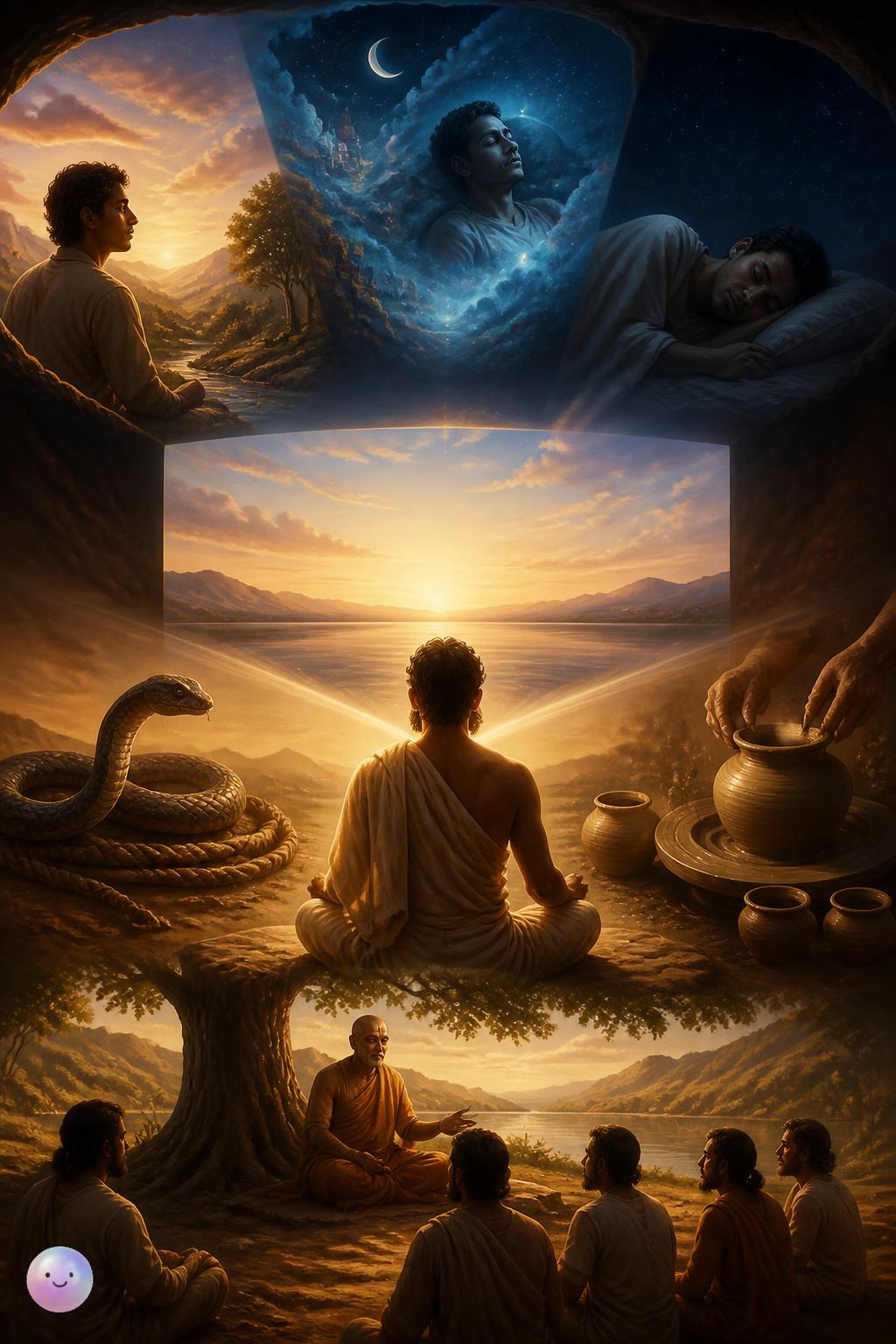
sloane Turiya, meaning 'the fourth,' is the pure consciousness that witnesses all three states of sleep and waking.
The innermost soul or spiritual essence of an individual. In the eighth century, Adi Shankara argued this true self is identical to Brahman, the cosmic reality.
Which Upanishad is famous for analyzing the three states of consciousness and Turiya?