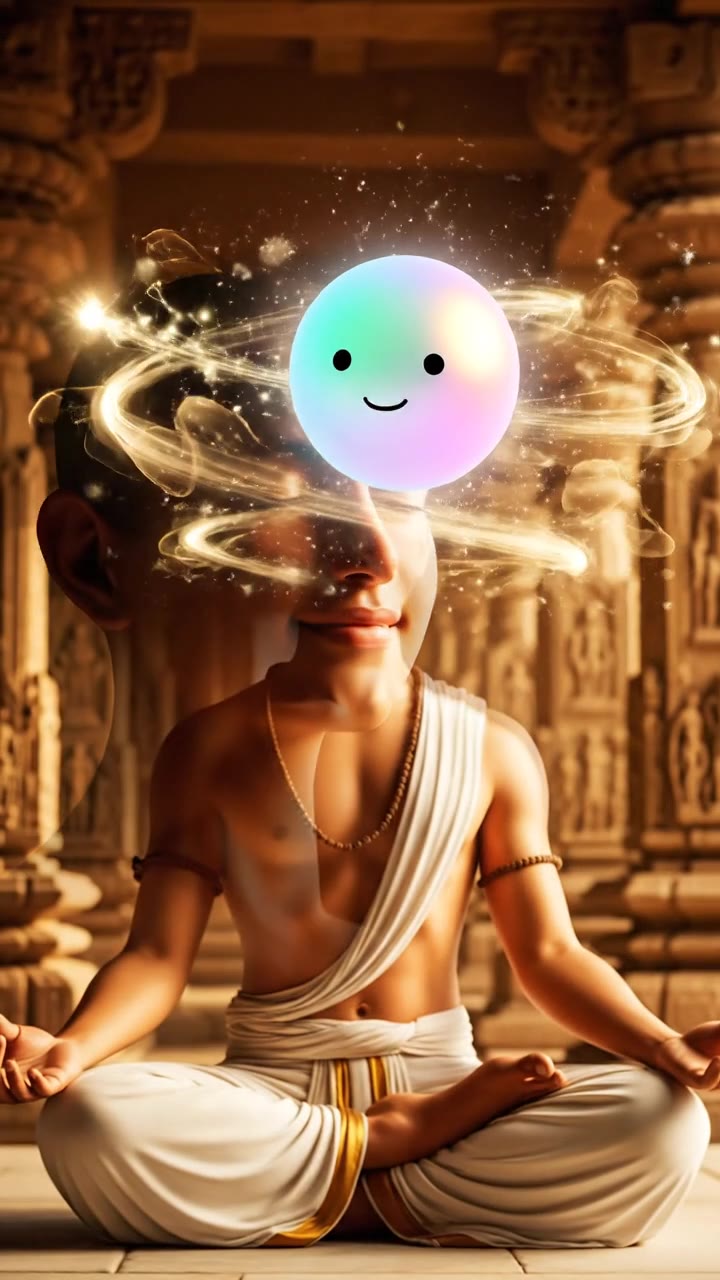
Advaita Vedanta: The Seeker Inside You
In Advaita philosophy, Atman is not your ego, your personality, or your physical body. It is the silent, unchanging witness that observes your thoughts and experiences. While your body and mind change constantly from childhood to old age, the Atman remains perfectly still and constant.
The ancient roots of oneness
The master of non-duality
The magic show of the mind
Waking up to who you are
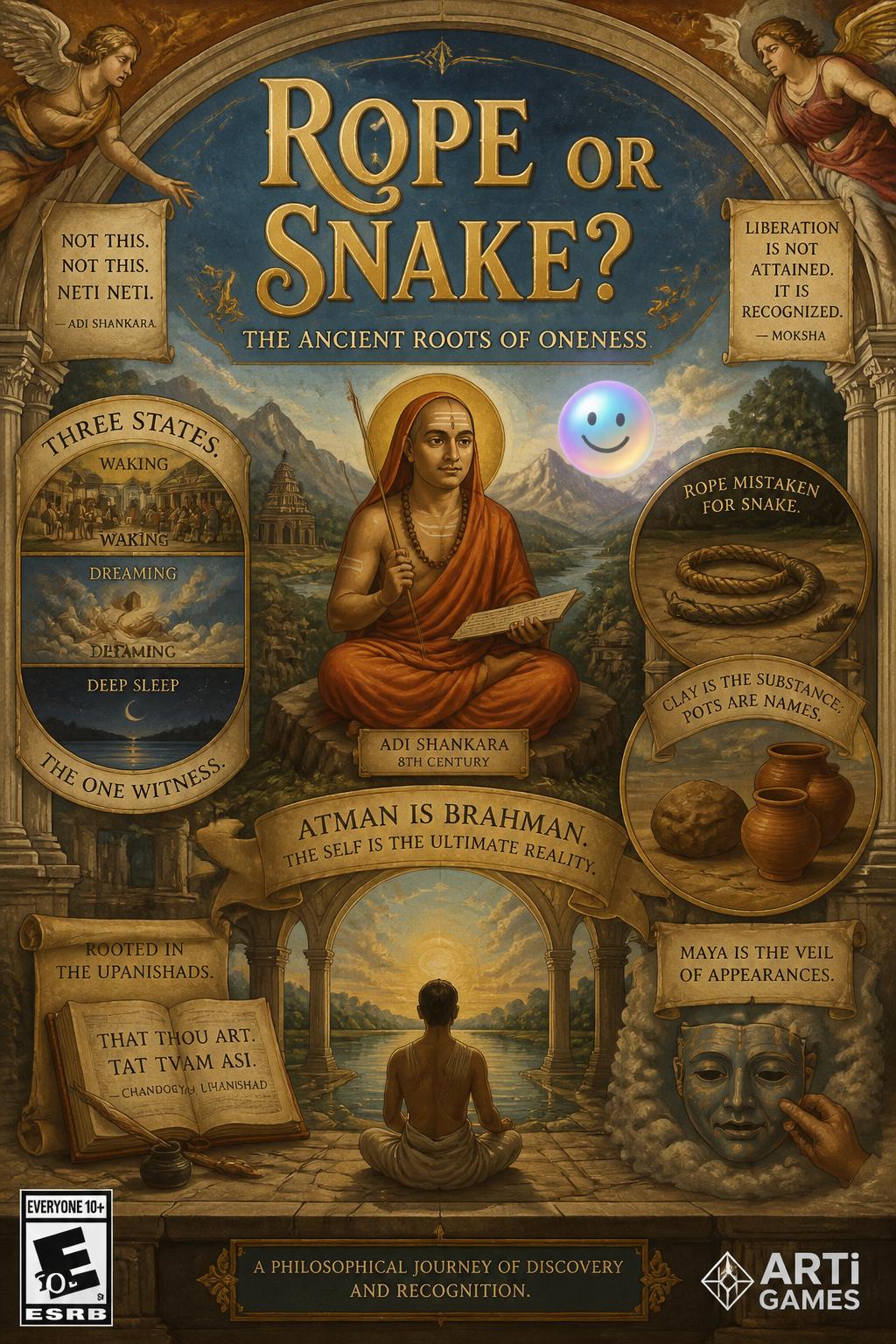
sloane Swipe away the snake to discover how Advaita Vedanta finds oneness behind the illusion.
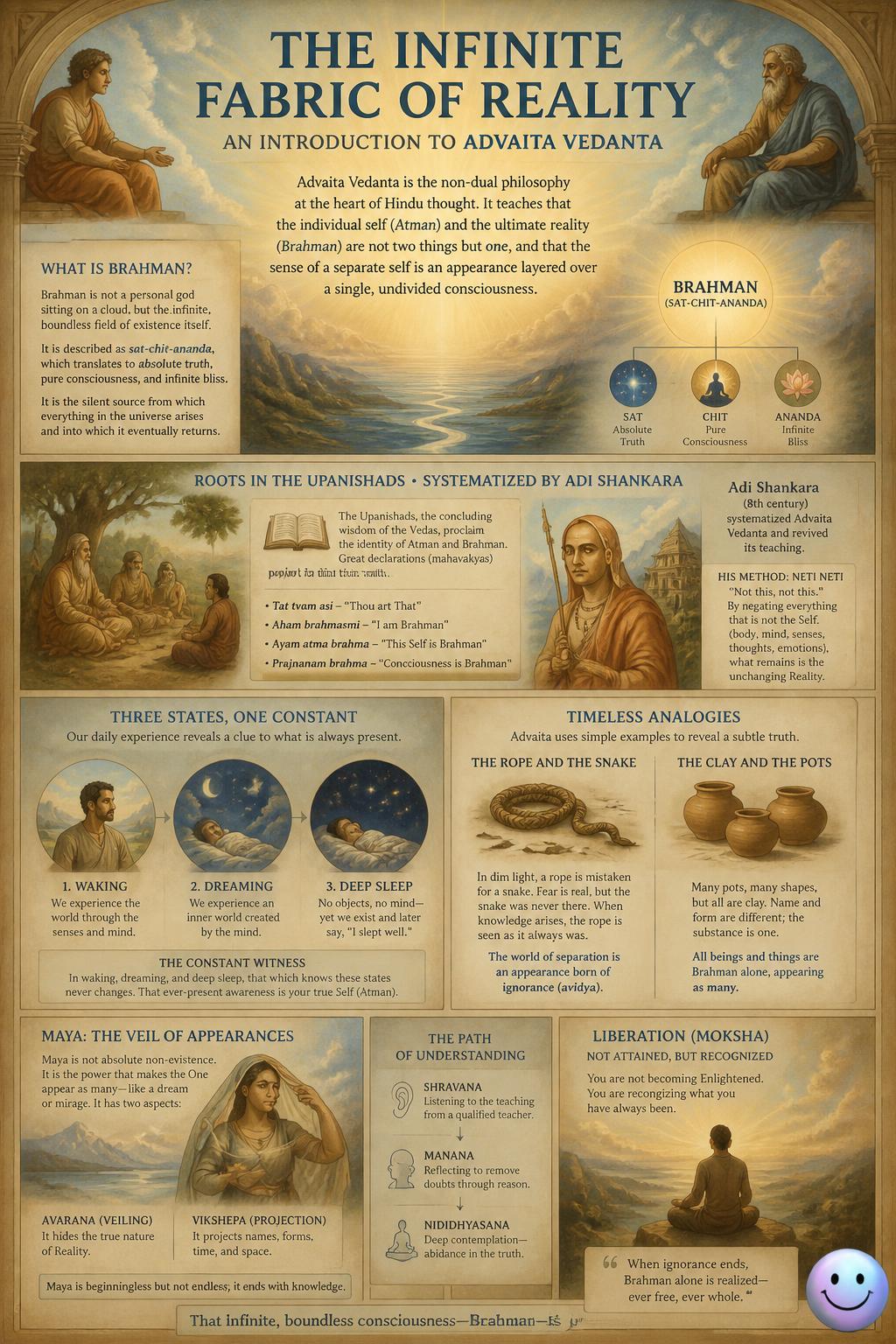
sloane Brahman represents the ultimate, formless reality or cosmic consciousness that underlies the entire universe.
Upanishad translation: The word Upanishad literally means sitting down near a teacher to receive secret, highly valuable spiritual teachings.
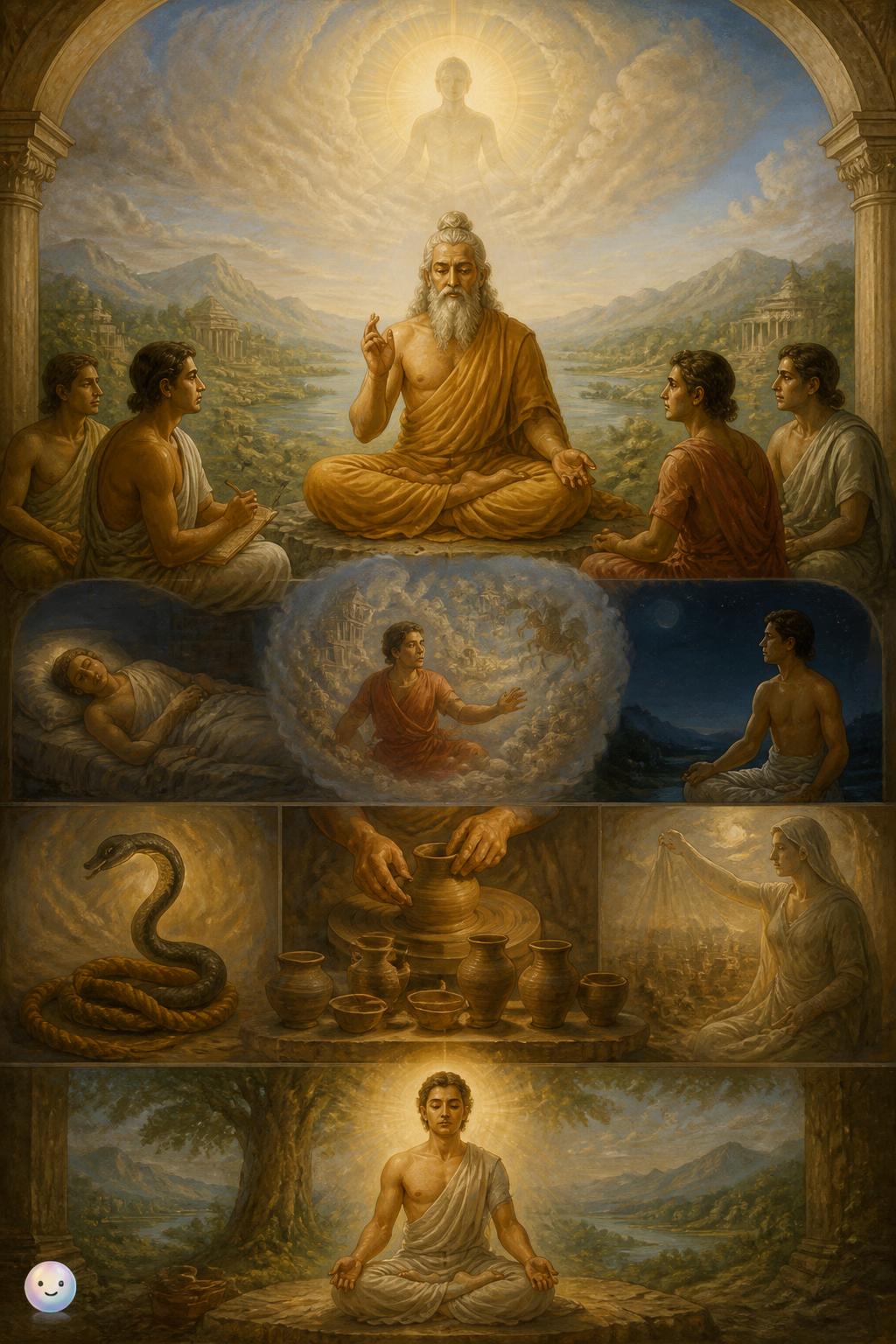
sloane Atman is the Sanskrit term for the true, unchanging self or soul deep within every individual.
A sacred Sanskrit text containing the foundational philosophical concepts of Hinduism. These texts provide the foundational source for Adi Shankara's eighth-century systemization of non-dual philosophy.
What is the Sanskrit term for the ultimate, unchanging cosmic reality in Advaita Vedanta?
How many principal Upanishads did philosophers traditionally write major commentaries on?