
What is the existential danger of chasing online likes?
Test your knowledge of Sartre's philosophy on authenticity and bad faith in the digital age with this quiz on social media validation.
The weight of absolute freedom
Playing roles and bad faith
Authenticity in the digital age
sloane Sartre said being watched turns us into objects, and online likes create a permanent digital gaze.
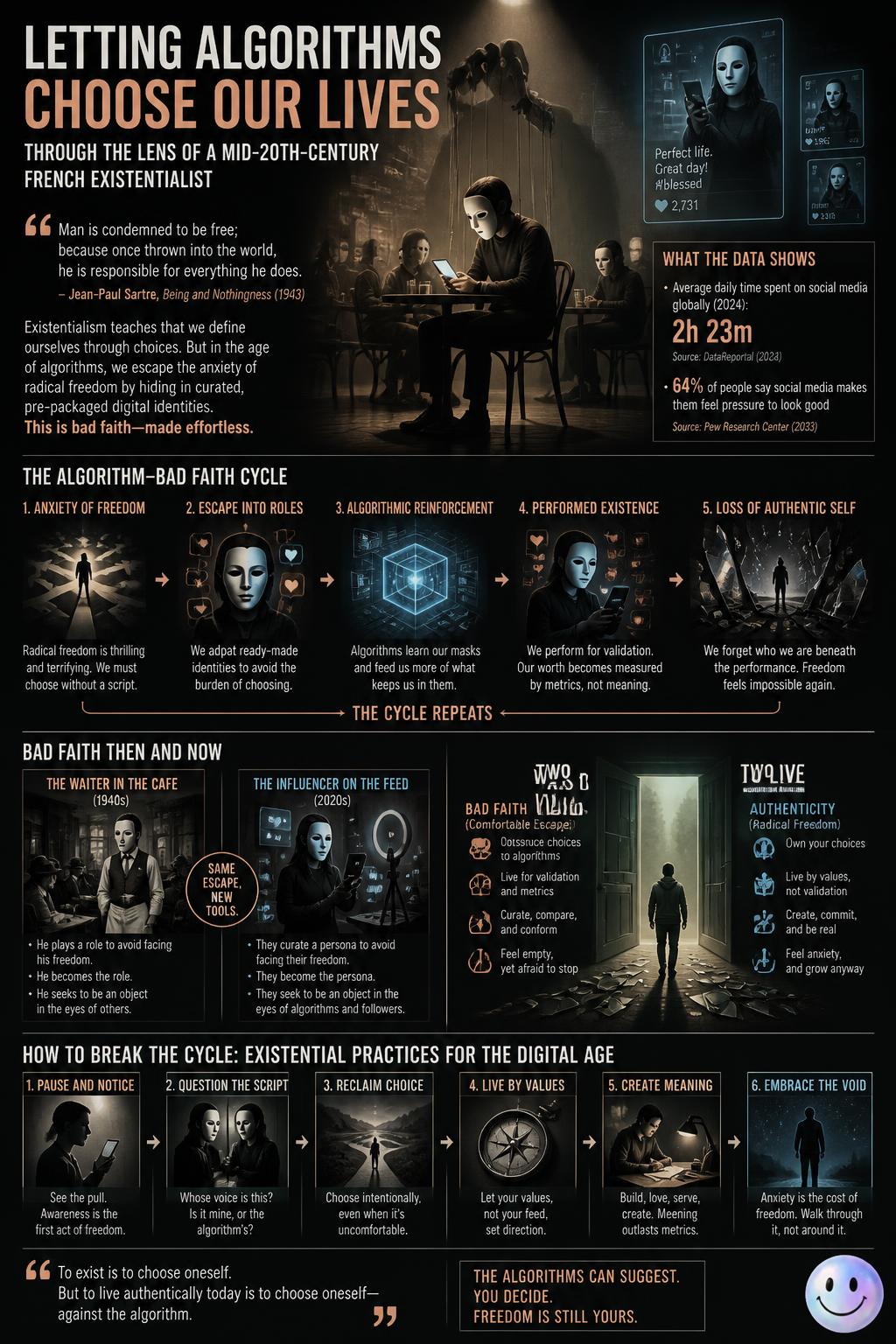
sloane Letting algorithms choose what we watch or believe helps us avoid the anxiety of making authentic choices.
sloane To live authentically, actively create yourself through conscious choices and accept the consequences without excuses.
sloane Curating perfect online profiles treats our changing lives as finished objects, which Sartre would call bad faith.
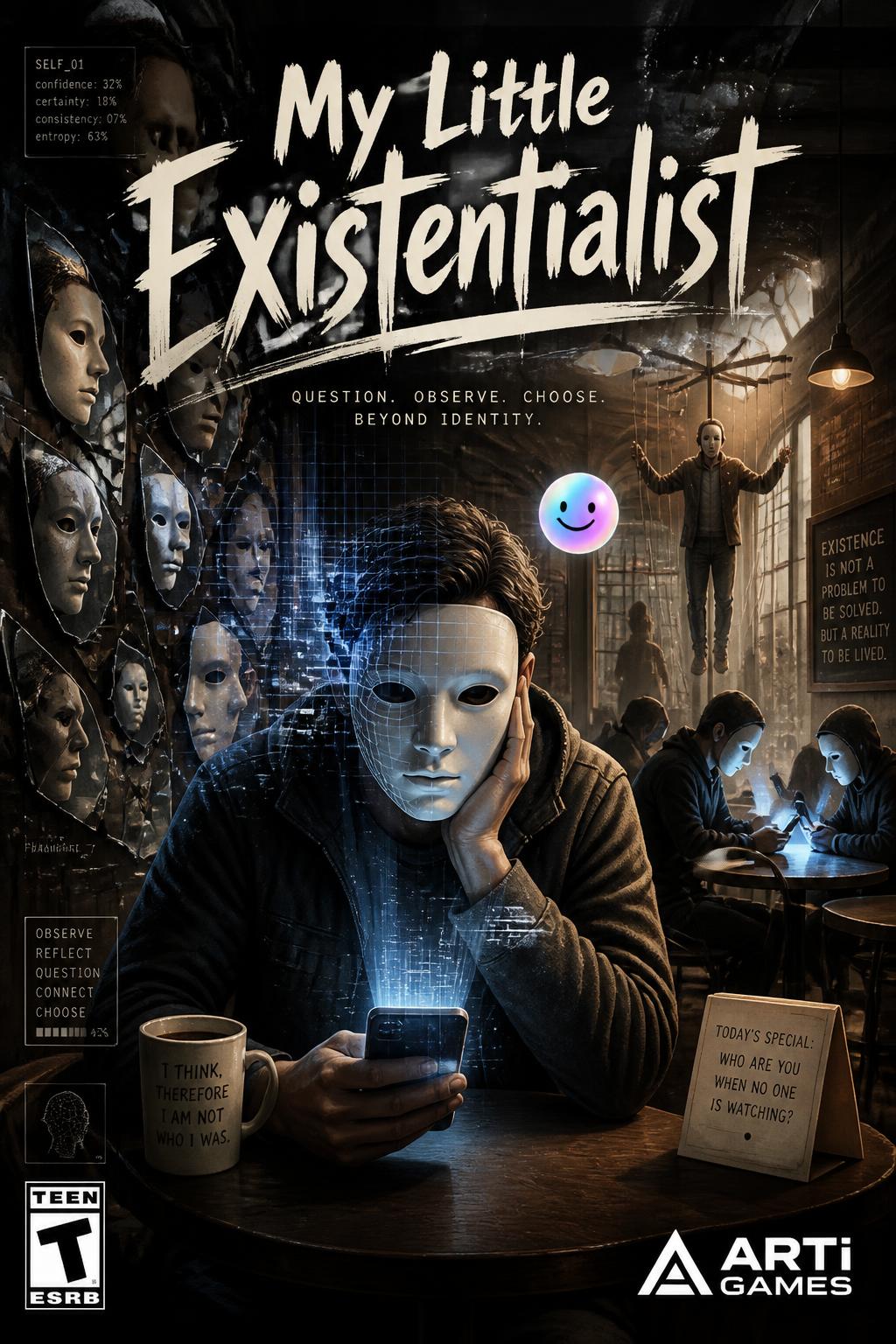
sloane Swipe away curated online profiles to discover Sartre's ideas on freedom and bad faith.
sloane Digital Authenticity and Bad Faith
We're playing roles like Sartre's café waiter behind our glowing screens!
Sartre's writing fuel: To maintain his grueling writing schedule, Sartre consumed massive amounts of coffee, tea, cigarettes, and corydrane, an amphetamine-aspirin mix popular in 1950s France.

The quality of being genuine, original, or true to one's own character. Sartre's 1943 work Being and Nothingness helps analyze how modern users construct curated online personas.
How does Sartre's view of a 'true self' differ from popular modern self-help advice?
How would Jean-Paul Sartre likely view a highly curated Instagram or TikTok profile today?
What did Jean-Paul Sartre call the experience of realizing someone is watching you, which turns you into an object?
According to Sartre's philosophy, what are we doing when we let online algorithms make all our choices?
According to existentialism, why is making a bad choice often better than making no choice at all?