Chagyeong: Borrowed Scenery in Architecture
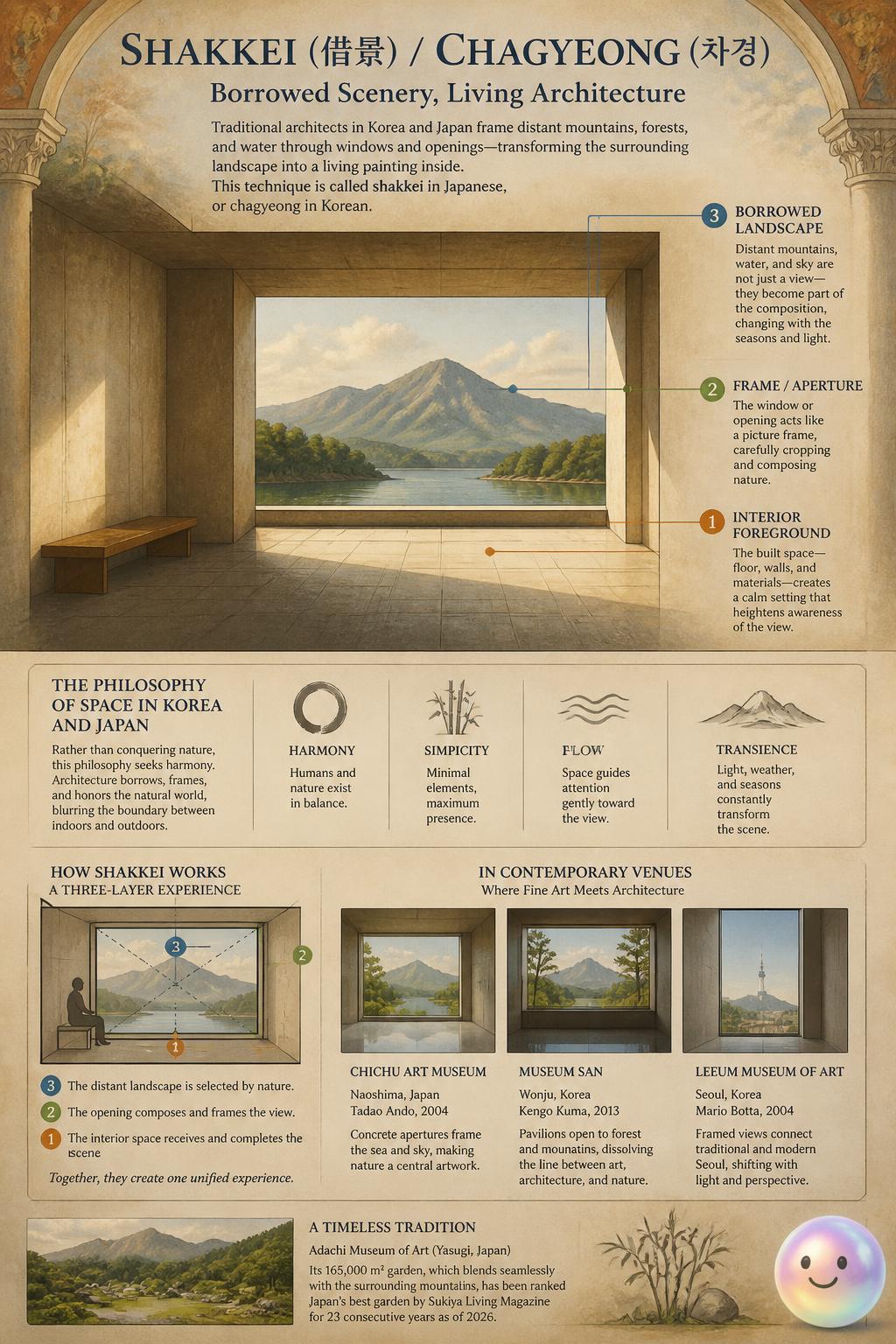
Discover the concept of chagyeong, or borrowed scenery, where natural outdoor landscapes are integrated into architectural spaces as living paintings.
Chapter 1
Master of light and concrete
Chapter 2
Seoul's architectural trifecta at Leeum
Chapter 3
Naoshima and the island of art
Chapter 4
The philosophy of space in Korea and Japan
Ch 4 · The philosophy of space in Korea and Japan
Glossary
yeobaek (noun)
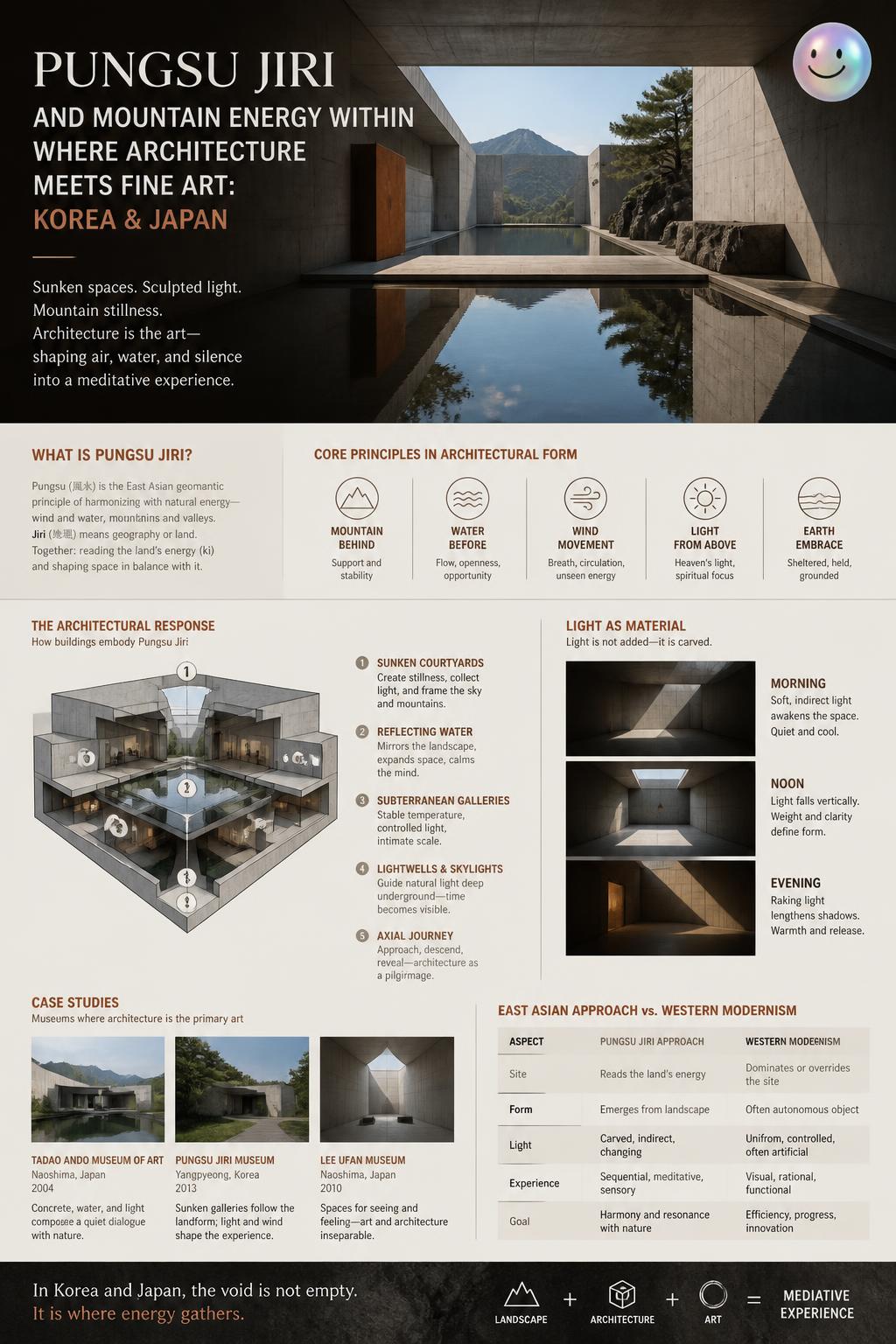
The Korean design philosophy of leaving empty space on a canvas or in a room, allowing the viewer's mind to actively fill in the rest. At beautiful venues like Korea's Museum SAN, architects use this concept by framing empty mountain views and quiet concrete courtyards, proving that sometimes what is left out is just as powerful as what is put in.
The Korean design philosophy of leaving empty space on a canvas or in a room, allowing the viewer's mind to actively fill in the rest. At beautiful venues like Korea's Museum SAN, architects use this concept by framing empty mountain views and quiet concrete courtyards, proving that sometimes what is left out is just as powerful as what is put in.
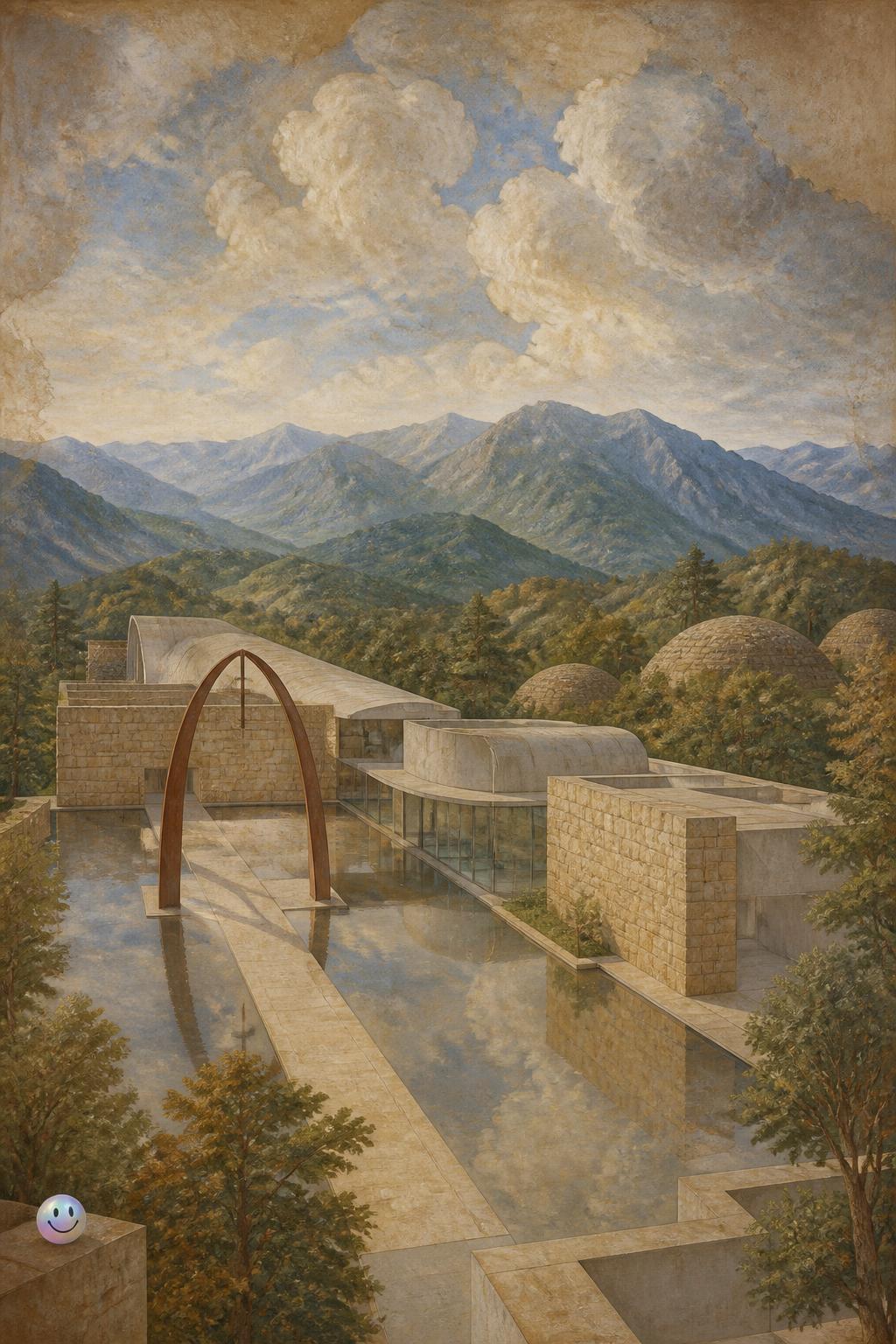
choko Museum SAN sits on a high ridge, flowing with the earth to harmonize with mountain energy.
choko Explore the design and beauty of the Madang courtyard of light, where architecture meets fine art in Korean and Japanese museum venues.
Fun Fact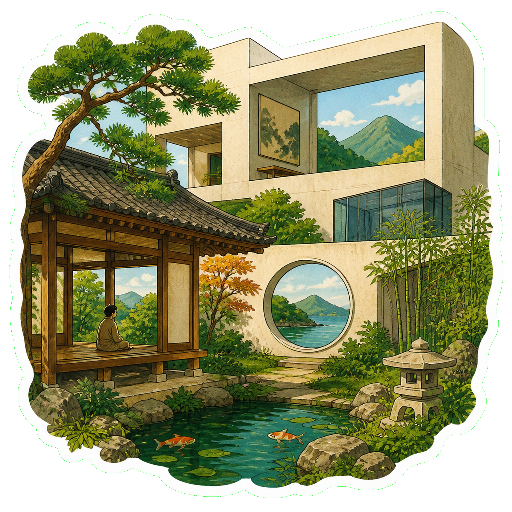
Borrowed scenery: The word chagyeong translates literally to borrowing scenery, treating the natural outdoor landscape as a free, living painting.
Glossary
negative space (noun)
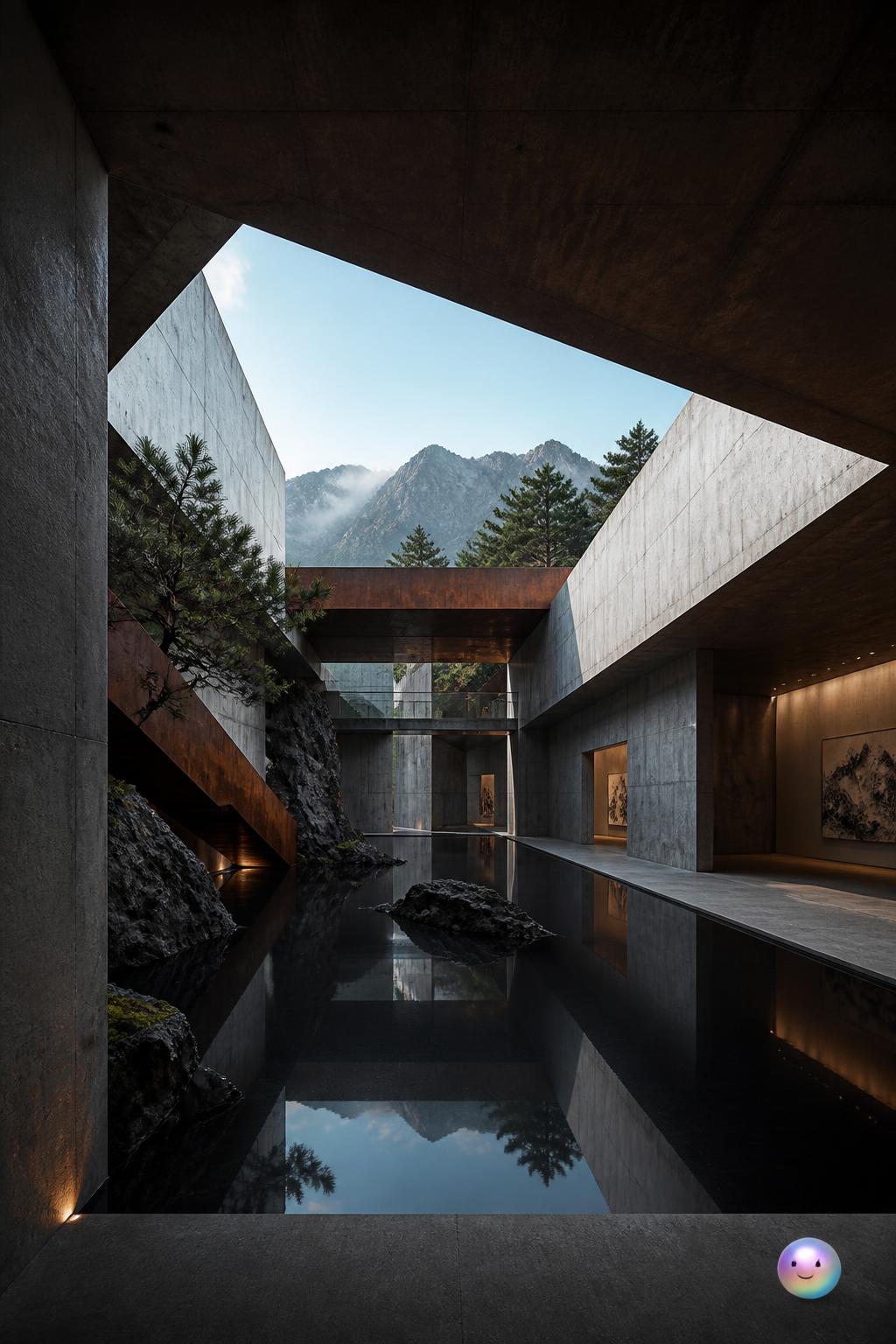
The empty or unoccupied area in and around the main subject of an artistic or architectural work. Tadao Ando utilized negative space at Wonju's Museum SAN to harmonize concrete structures with the surrounding forest.
The empty or unoccupied area in and around the main subject of an artistic or architectural work. Tadao Ando utilized negative space at Wonju's Museum SAN to harmonize concrete structures with the surrounding forest.
Quiz
What is the Korean term for the beauty of empty space or white space in art and design?
BETA
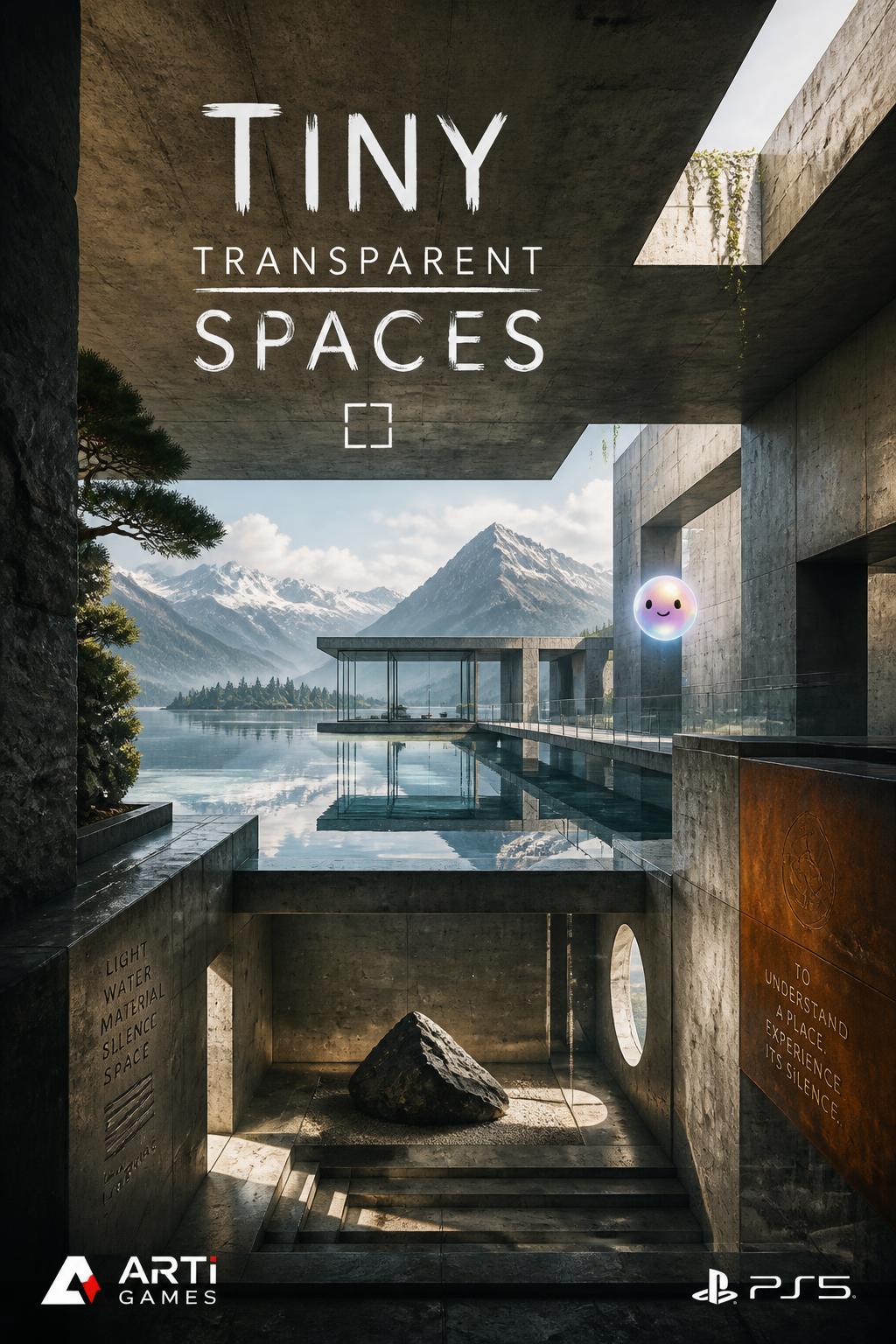
choko Arrange glass and concrete walls to discover how Korean and Japanese museums frame nature.
choko Museums in Korea and Japan design windows to frame nature, blending outdoor landscapes with indoor spaces.
Quiz
What is the name of the traditional Korean courtyard that serves as an open, central gathering space?
choko Korean and Japanese architects leave open spaces in museums to give the mind room to breathe.
Quiz
What material does artist Suh Do-ho use to sew his translucent, architectural sculptures?
Quiz
At what elevation above sea level is South Korea's Museum SAN built to align with mountain energy?
Quiz
Which Korean artist is famous for creating floating, transparent fabric replicas of his childhood home?
Quiz
Which concept in Japanese aesthetics refers to the artistic use of negative space or emptiness?