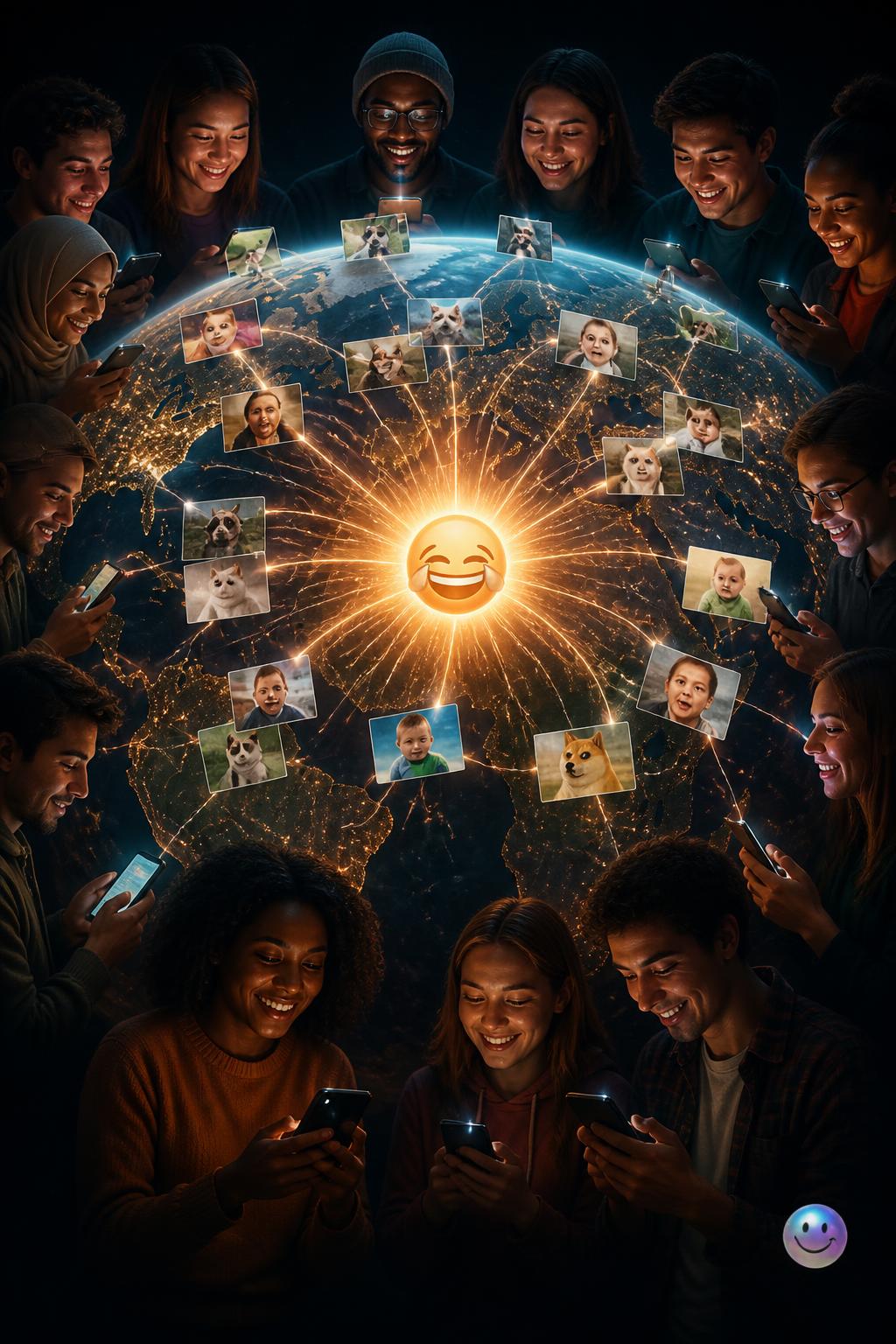
The sudden, intense surge of feeling—like awe, excitement, or shock—that instantly grabs our attention and drives us to share something with others. It is the psychological trigger that explains why a hilarious meme can circle the globe in minutes, while standard news takes hours to spread.
The psychology of instant sharing
Global highways of digital culture
The algorithmic fast lane
Real world impact of viral ideas
YOUR GOAL
Master of How memes outrun the news
The sudden, intense surge of feeling—like awe, excitement, or shock—that instantly grabs our attention and drives us to share something with others. It is the psychological trigger that explains why a hilarious meme can circle the globe in minutes, while standard news takes hours to spread.
andy Meme Virality Psychology
Click and share, click and share, We just want that instant spark.

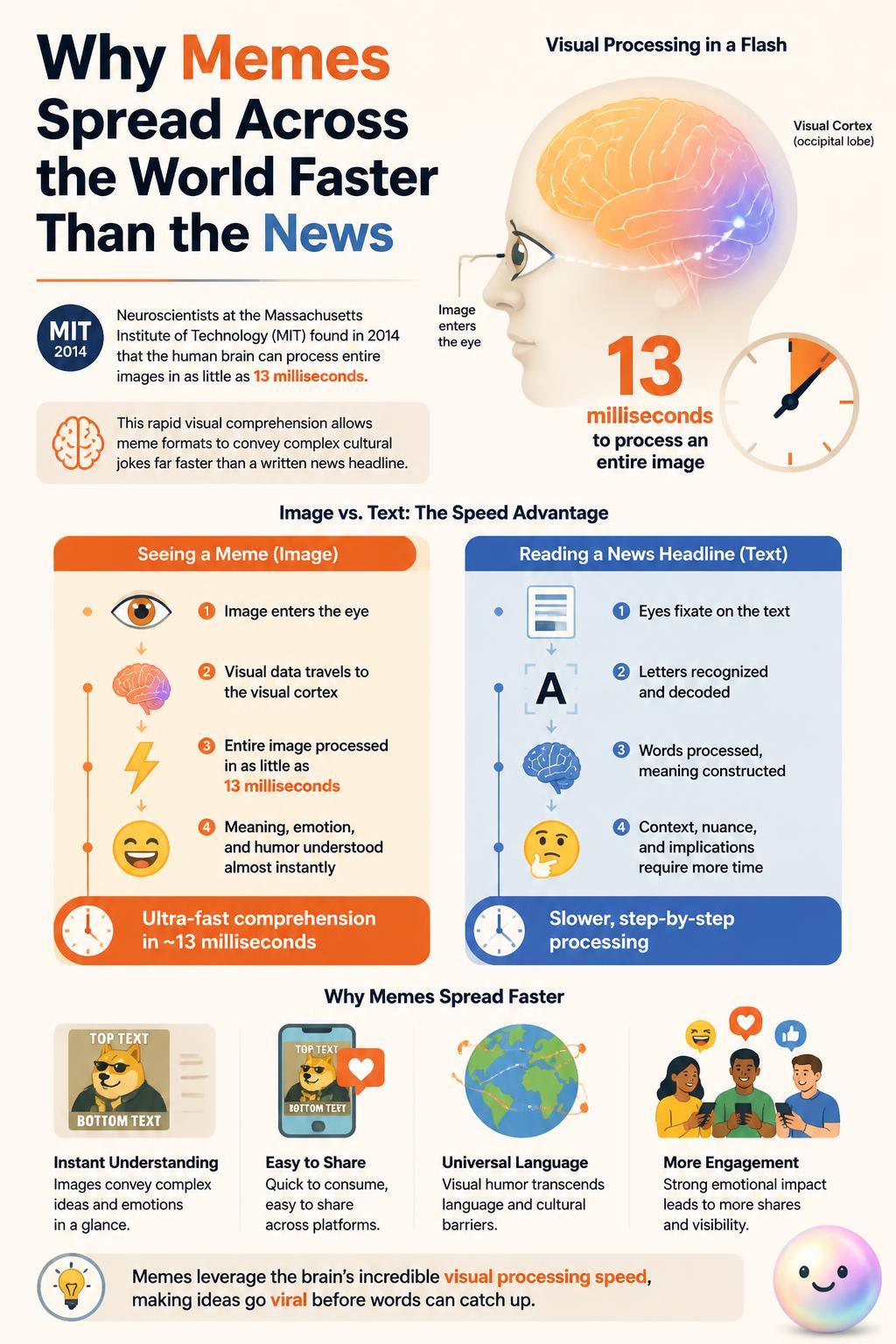
andy Human brains process images thousands of times faster than text, making visual memes instantly understandable.

andy Memes act as social glue, signaling belonging and shared identity across internet communities.

andy Swipe viral memes to discover why they spread across the world faster than the news.
Meme origins: The word 'meme' was actually invented in 1976 by evolutionary biologist Richard Dawkins to describe how ideas spread like genes.
The tendency of an image, video, or piece of information to be circulated rapidly and widely from one internet user to another. In 2012, Jonah Berger proved that intense emotions like amusement trigger this immediate transmission of digital media.
According to a 2011 Wharton School study, what type of emotional content is 34% more likely to be shared online?
Why do high-arousal emotions like awe or anger make people share content more quickly?
In what year was the photograph used in the famous 'Distracted Boyfriend' meme originally taken?
How fast did researchers at MIT find that the human brain can process an entire image?