Chapter 1
How the brain builds memories
Chapter 2
The tricks our minds play
Chapter 3
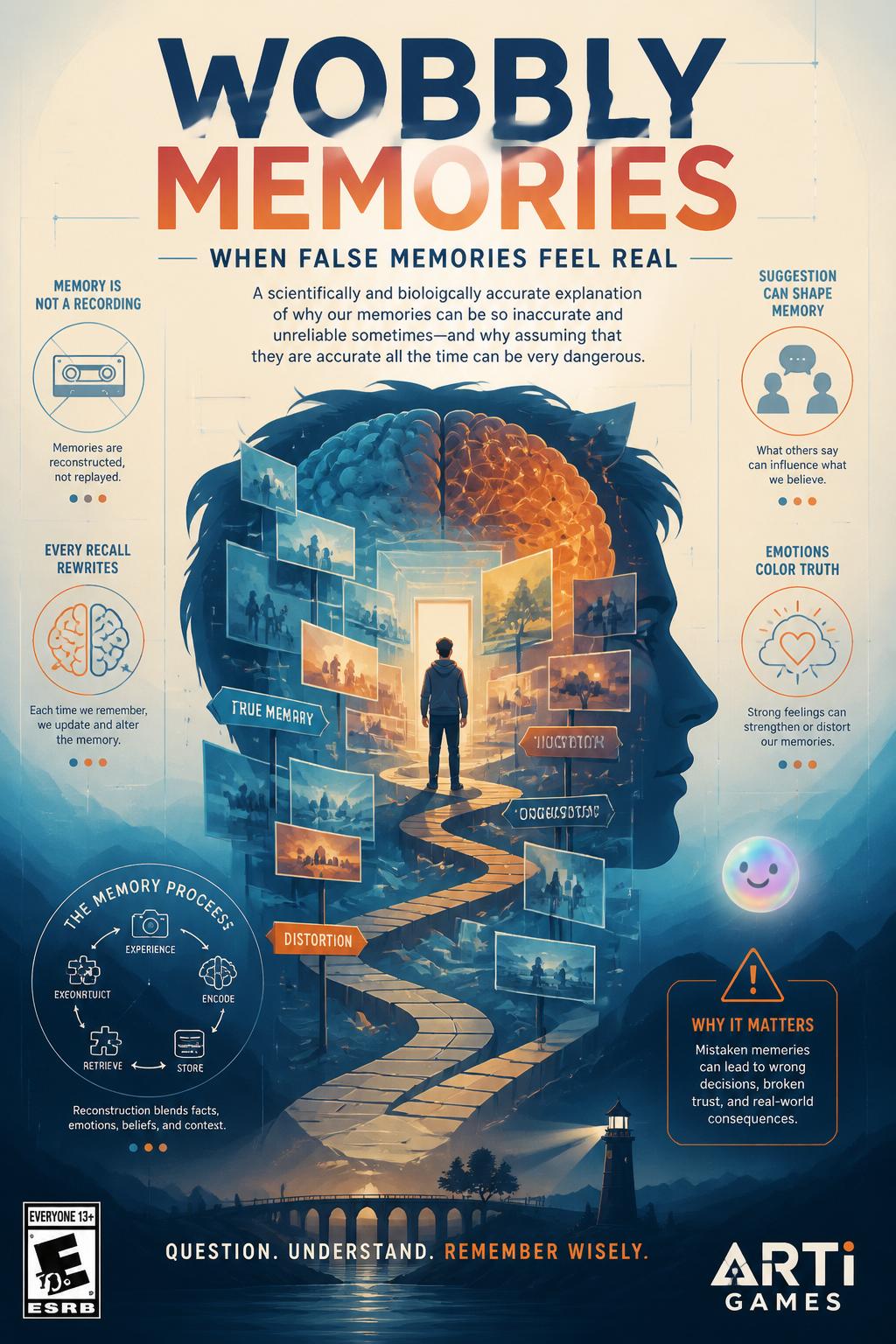
When false memories feel real
Chapter 4
The high stakes of memory errors
Ch 3 · When false memories feel real
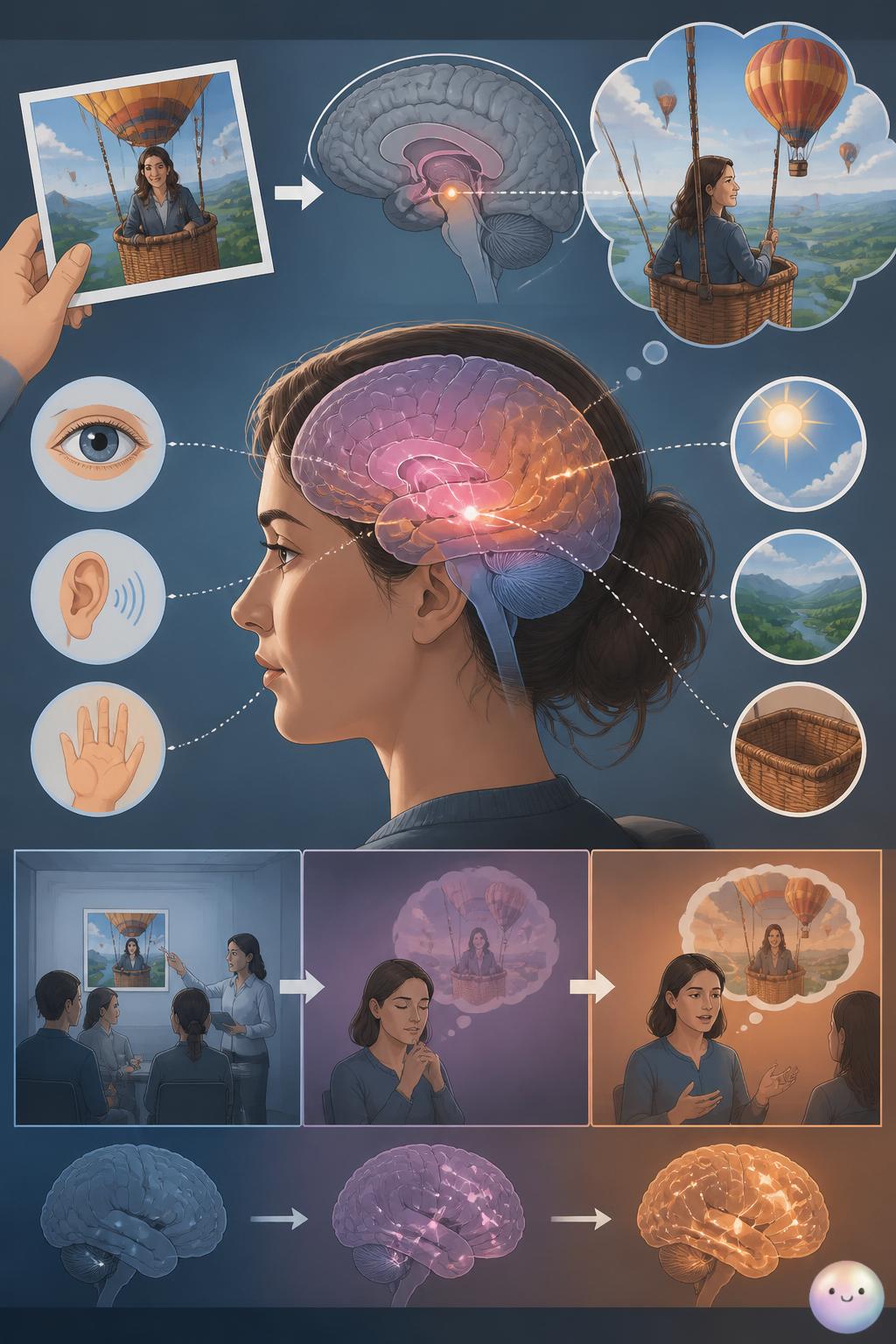
renaissanceman Showing people doctored photos can make them remember events that never happened.
Quiz
What do fMRI brain scans reveal about the difference between true and false memories?
Quiz
Which of the following is a common way false memories are accidentally created in therapy?
Quiz
What is the term for mixing up the source of a memory, such as confusing a dream with a real event?
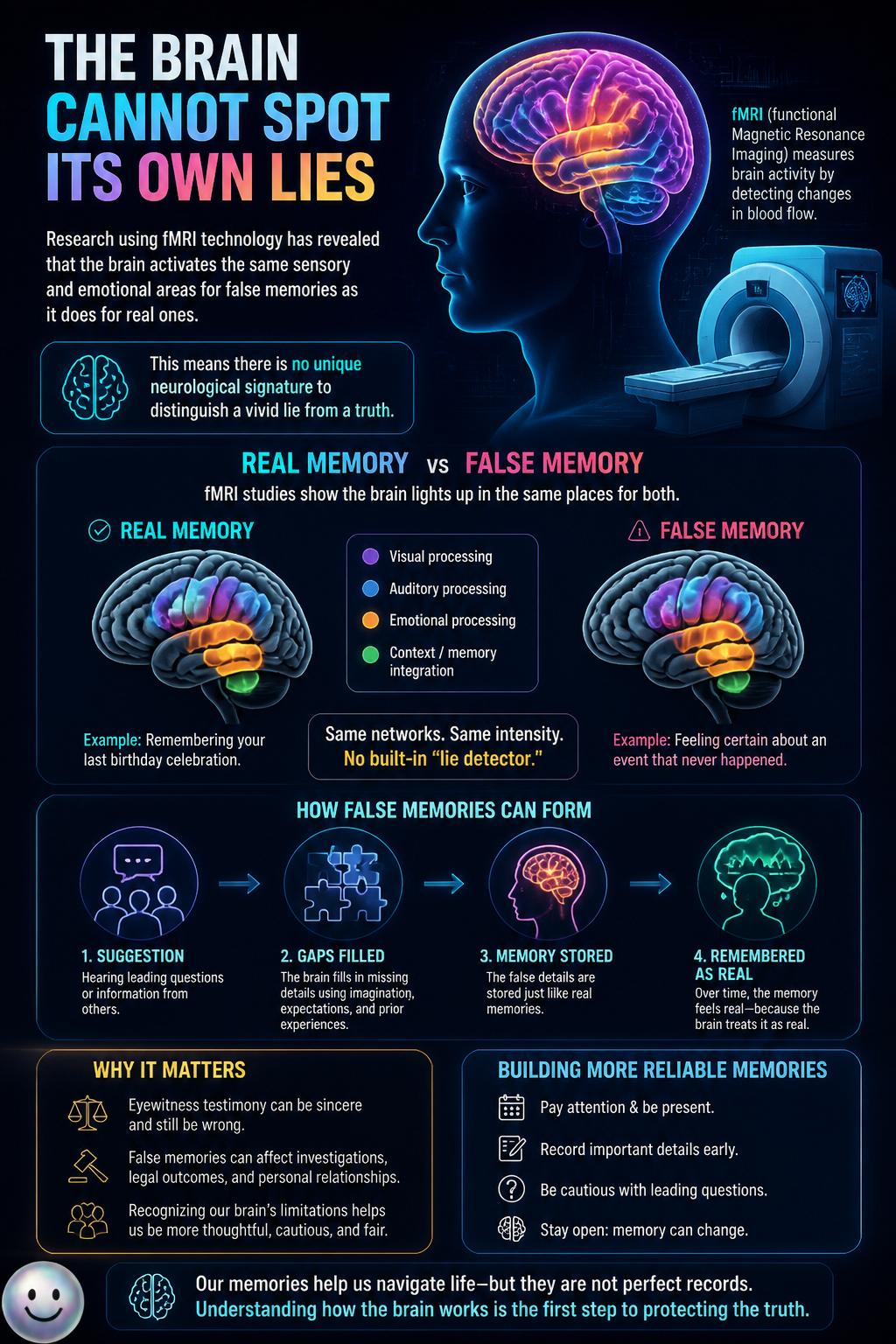
renaissanceman Functional brain scans show that true and false memories look nearly identical in active brains.
Quiz
In a 2002 New Zealand study, what doctored image was used to implant false memories?
Quiz
What percentage of participants in the 1995 'lost in the mall' study believed the fake memory?
Quiz
What is the scientific term for when repeatedly visualizing an action makes you believe you actually did it?
renaissanceman Memory Reconsolidation
Pull it up, rewrite it, lock it back down!
Quiz
Why are children more vulnerable to false memory implantation than healthy adults?
Quiz
What famous memory implantation study was conducted by Elizabeth Loftus and Jacqueline Pickrell in 1995?
Fun Fact
Balloon ride: In a 2002 study, 50% of people shown a fake photo of themselves in a hot air balloon recalled the event in detail.
Glossary
misinformation effect (noun)
The tendency for post-event information to interfere with and alter the memory of an original event. In 1974, Elizabeth Loftus demonstrated this by altering eyewitness car crash speed estimates with a single verb.
The tendency for post-event information to interfere with and alter the memory of an original event. In 1974, Elizabeth Loftus demonstrated this by altering eyewitness car crash speed estimates with a single verb.